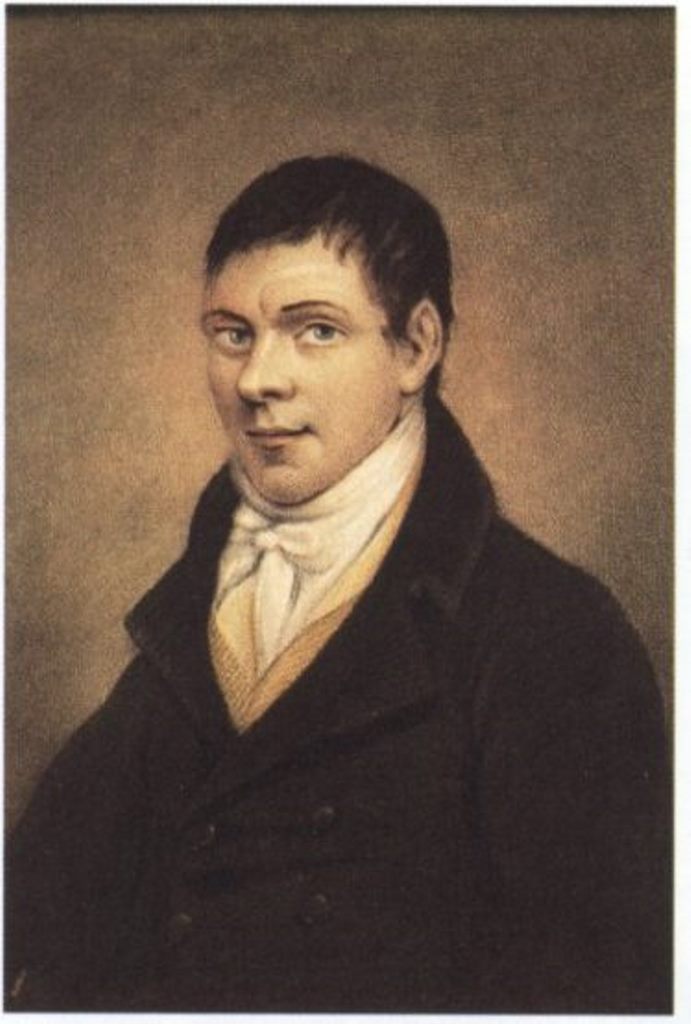
Among the many figures who have shaped Wicklow’s history, few have left as lasting an impression as Michael Dwyer, the renowned United Irishman and insurgent leader whose name remains closely linked with the Wicklow Mountains and the events of 1798.
Born on 1 January 1772, Dwyer was the eldest of seven children in a Catholic family from the Glen of Imaal. He was educated locally at Ballyhubbock school before his family moved to Eadestown, where they farmed sheep. In 1797, Dwyer joined the Society of United Irishmen, a decision that would change the course of his life.
A Rebel Leader in Wicklow
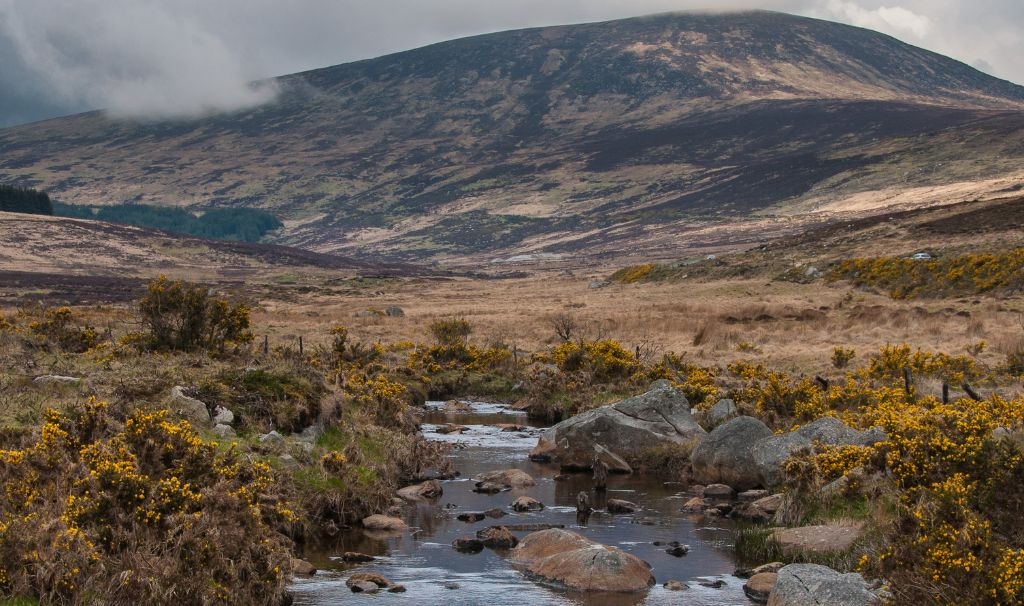
When rebellion broke out in May 1798, Dwyer joined the United Irish forces gathering in County Wicklow. Serving as a captain under General Joseph Holt, he took part in fighting at Arklow, Vinegar Hill, Ballyellis and Hacketstown. Following the defeat of the rebels, Dwyer withdrew into the Wicklow Mountains, where the rugged landscape provided a natural refuge.
When Holt surrendered later that year, command passed to Dwyer. He and his followers continued a guerrilla campaign against government forces, using their knowledge of the Wicklow landscape to evade capture. The mountains, valleys and remote settlements became central to Dwyer’s ability to continue his resistance.
Dwyer relied heavily on local families and supporters for shelter and assistance. Caves, dugouts and safe houses were used to conceal his men, while the Government responded with an extensive military campaign. New barracks were constructed and a military road was built through the Wicklow Mountains in an effort to bring Dwyer and his followers under control.
The Dramatic Escape from Dernamuck
One of the most famous episodes in Dwyer’s story took place at Dernamuck near Donard on 15 February 1799.
Dwyer and around a dozen companions were sheltering in three cottages when British forces surrounded the area following information from an informer. After the first two cottages surrendered, Dwyer and his men decided to defend the third, known as Miley Connell’s cottage.
As the cottage came under attack and caught fire, Dwyer found himself the only man who had not been wounded. At this crucial moment, his companion Sam McAllister stood in the doorway and drew the soldiers’ fire, giving Dwyer the opportunity to escape.
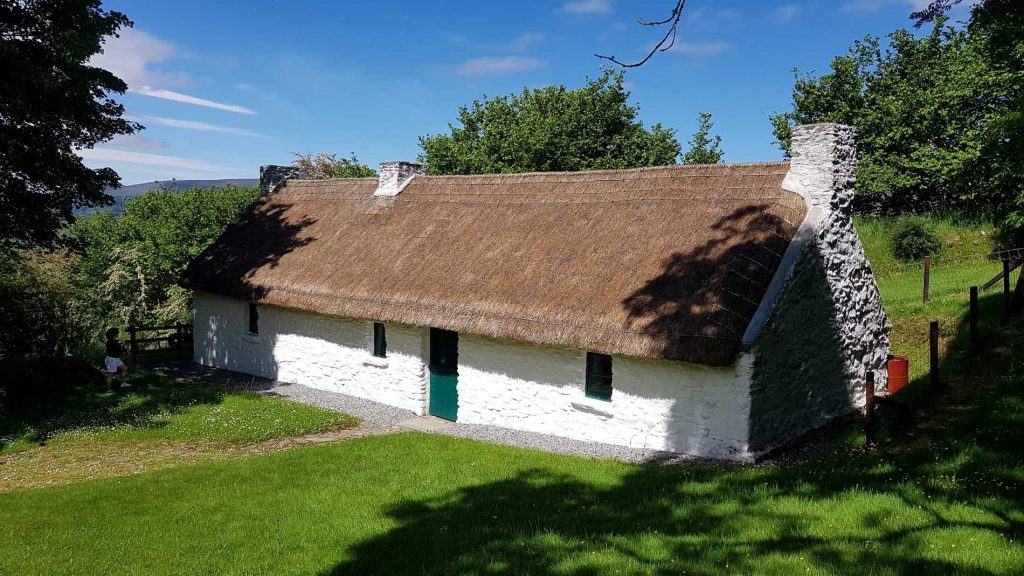
The building, now known as the Dwyer–McAllister Cottage, was later restored and is recognised as a national monument. Today, it provides a tangible connection to one of the most dramatic episodes in Wicklow’s revolutionary history.
Michael Dwyer and Robert Emmet
Dwyer later met Robert Emmet and learned of plans for the 1803 rebellion in Dublin. However, he was reluctant to commit his followers to march on Dublin unless the rising first showed signs of success.
When Emmet’s rebellion failed, pressure on Dwyer and his supporters intensified. Government forces increased their presence throughout Wicklow, while severe measures were taken against those suspected of helping the rebels. Barracks were established at places including Glencree, Laragh, Glenmalure and Aghavannagh, while the military road through Wicklow provided the Government with greater access to the mountains.
Eventually, in December 1803, Dwyer agreed to surrender on the understanding that he would be allowed safe passage to America. The agreement was not honoured, and after a period in Kilmainham Jail, he was transported to Australia in 1805.
From Wicklow to Australia
Dwyer arrived in Sydney in February 1806 with his wife Mary, their children and several of his companions. Although he initially received free settler status and a grant of land, his life in Australia remained turbulent.
He was twice imprisoned and faced accusations of plotting an Irish uprising. He was ultimately acquitted of the charges and following the overthrow of Governor William Bligh during the Rum Rebellion, his free status was restored.
Dwyer later became Chief of Police at Liverpool, New South Wales, serving from 1813 to 1820. His later years were marked by financial difficulties and imprisonment for debt. He died in Sydney on 23 August 1825, aged 53.
A Lasting Legacy
Although Dwyer spent the final years of his life in Australia, his connection with Wicklow has endured. His remains were eventually moved several times before being reinterred at Waverley Cemetery in Sydney, where a substantial memorial was erected. The monument became an important symbol of the Irish struggle for self-government, and huge crowds attended the commemorations.
His memory is also preserved here in Wicklow. In 1900, a monument was erected in Market Square, Wicklow town, commemorating Billy Byrne, Michael Dwyer, General William J. Holt and William Michael Byrne.
Perhaps the most powerful reminder of Dwyer’s story is the Dwyer–McAllister Cottage, which was acquired by the Irish State in 1948. Together with the monuments and historic landscapes associated with the 1798 Rebellion, it forms part of Wicklow’s rich revolutionary heritage.
Today, visitors exploring the Wicklow Mountains are walking through the same rugged landscape that once provided Dwyer and his followers with refuge. His story adds another fascinating layer to Wicklow’s mountains, valleys and villages — bringing the county’s history to life and reminding us of the people who once fought, lived and sought shelter among these landscapes.