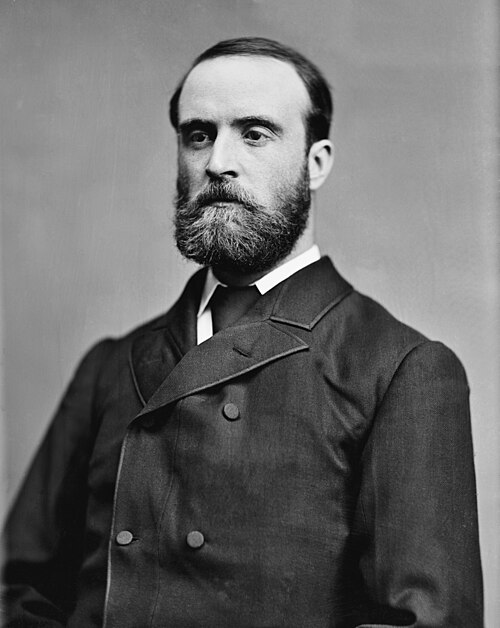
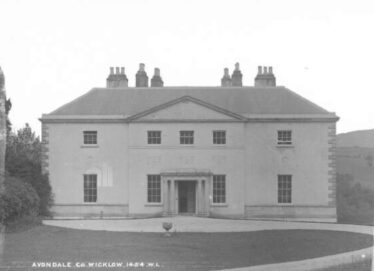
Born June 1846 into a landowning family at Avondale, County Wicklow, Charles Stewart Parnell became one of the most influential figures in Irish political history. Growing up surrounded by Wicklow’s wild, green hills, young Charles developed a deep love for the land. But he also inherited something else from his family: a fierce, rebellious spirit.
Elected to Parliament in 1875, he quickly emerged as a leading voice for Irish Home Rule and land reform, earning the title “The Uncrowned King of Ireland.”
As president of the Irish National Land League, founded in 1879 alongside Michael Davitt, Parnell campaigned for fair rents, secure tenancy, and land ownership for Irish farmers. His famous 1880 speech at Ennis encouraged communities to socially isolate those who took over evicted tenants’ farms, giving rise to the term “boycotting” after the case of Captain Charles Boycott in County Mayo.
Parnell united the Irish Parliamentary Party into a disciplined political force and transformed Home Rule from a distant ambition into a central issue in British politics. His success in the 1885 general election persuaded British Prime Minister William Gladstone to support Irish Home Rule, although the first Home Rule Bill failed in 1886.
The Plot to Destroy the “Uncrowned King”
By 1887, Charles Stewart Parnell was the most feared politician in Britain. He was on the verge of winning Home Rule for Ireland, and his enemies were desperate to stop him. On the morning of April 18, London’s premier newspaper, The Times, dropped a political bombshell that shocked the empire. They published a series of articles called “Parnellism and Crime.” Inside was a copy of a letter, supposedly written and signed by Parnell himself falsely linking him to the Phoenix Park murders.
Parnell stood up in the House of Commons that very night and the called the letter a “villainous and barefaced forgery.” But the British public was outraged, and his political career hung in the balance.
To uncover the truth, the British government set up a massive judicial investigation known as the Parnell Commission. For months, lawyers dug through the evidence. Finally, the trail led to a shady, bankrupt Irish journalist named Richard Pigott. Pigott was the man who had sold the letters to The Times for a mountain of cash.
Despite his historic victory over the forged letters the ultimate downfall of Charles Stewart Parnell came a few months later by the public revelation of his long-term relationship with Katherine O’Shea.
The Love Affair That Broke a Nation
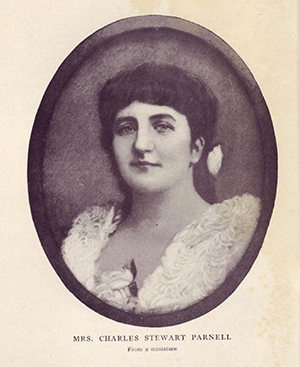
Back in 1880, Parnell had met Katherine “Kitty” O’Shea, the charming wife of a fellow Irish politician, Captain Willie O’Shea. It was love at first sight. For nearly ten years, Charles and Katherine lived a secret double life. They shared a home in London, and Parnell even fathered three of Katherine’s children. Captain O’Shea knew about the affair, but he kept quiet for years, waiting to inherit a massive fortune from Katherine’s wealthy aunt.
But in late 1889, the aunt passed away, and the inheritance fell through. Furious and seeking revenge, Captain O’Shea filed for a highly public divorce on the grounds of adultery.
To the deeply religious public of the 19th century, Parnell was no longer a political hero. He was branded a public sinner.
The political fallout was swift and brutal. The Catholic Church in Ireland condemned him. In London, British Prime Minister William Gladstone issued a cruel ultimatum: if Parnell remained the leader of Ireland, the British Liberal Party would withdraw its support, and the dream of Irish Home Rule would die.
Parnell refused to step down. This decision tore his own political party apart in a bitter event known as “The Parnell Split.” Best friends became mortal enemies overnight, and communities across Ireland were deeply divided.
A Tragic End
In June 1891, Charles and Katherine finally married in a quiet ceremony. But the heavy toll of the scandal had already ruined him.
Exhausted, broken-hearted, and traveling in the freezing rain to fight for his political life, Parnell’s health quickly collapsed. On October 6, 1891—less than a year after the divorce scandal broke—the “Uncrowned King of Ireland” died in Katherine’s arms. He was only 45 years old.
His body was brought home to his beloved Ireland, where over 200,000 heartbroken people marched through the streets of Dublin to Glasnevin Cemetery.
Although his career ended in controversy, Parnell’s legacy endures. His leadership reshaped Irish politics, advanced land reform, and laid the foundations for the later struggle for Irish self-government, making him one of County Wicklow’s most significant historical figures.