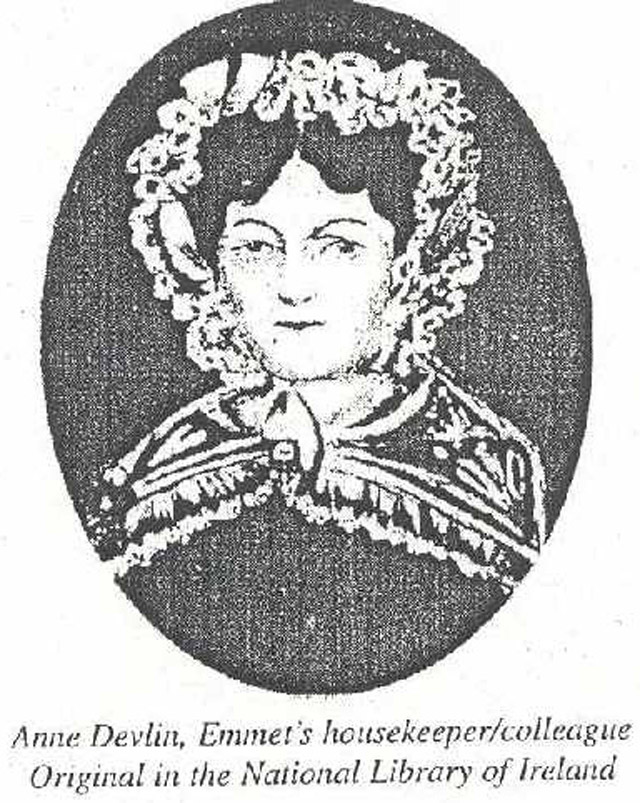
Born in Cronebeg 1780 near Aughrim, County Wicklow, Anne Devlin remains one of the county’s most courageous historical figures. When we think of the failed Irish Rebellion of 1803, names like Robert Emmet immediately come to mind. But the true backbone of that revolutionary chapter was a working-class woman whose endurance defied the entire weight of the British Empire.
Raised on her family’s farm near Rathdrum, she grew up during a period of political unrest that would shape the course of her life.
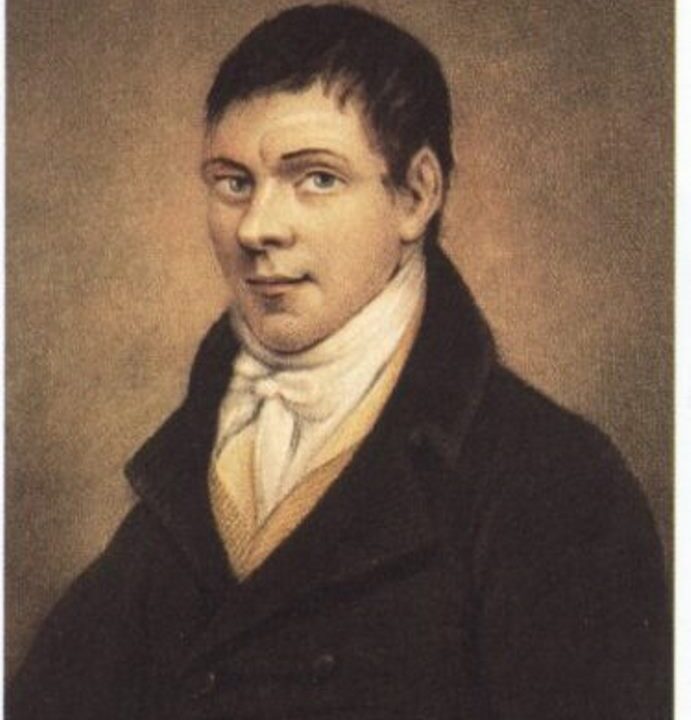
Although her family did not take part in the 1798 Rebellion, Anne supported her cousin, the Wicklow rebel leader Michael Dwyer, and cared for her imprisoned father while he was held in Wicklow Gaol. After moving to Rathfarnham in 1801, she became the trusted housekeeper and confidante of Robert Emmet, helping to organise meetings, transport weapons, and support preparations for the 1803 Rebellion.
The Price of Loyalty: Arrest and Torture
Following the collapse of Emmet’s uprising, British authorities raided the safehouse where Anne worked as a housekeeper. Recognizing her proximity to the rebel leader, soldiers demanded information. Anne was arrested and imprisoned without charge for nearly three years, Anne survived horrific physical and psychological torture and repeated interrogation in an attempt to force her to betray Emmet and the United Irishmen.
Weaponizing Her Family
Realising Anne would not break for her own sake, the state targeted her loved ones. The British authorities arrested and imprisoned over 20 members of her extended family, including her elderly parents and young siblings.
Tragically, the prison conditions proved fatal. Anne’s youngest brother died of disease while in custody—a heavy emotional toll she carried for the rest of her life.
Dublin Castle and a Belated Freedom
By 1806, political shifts in the British government prompted a review of political prisoners. Fearing she would be released; Dr. Trevor secretly transferred an emaciated Anne to the Record Tower at Dublin Castle.
Her salvation came from a local widow, Mrs. Hamlin, who discovered Anne’s whereabouts and fiercely petitioned the new Chief Secretary, Mr. Long. Upon personally visiting the prison and seeing Anne’s shocking, skeletal condition, a horrified Mr. Long ordered her immediate release.
Anne Devlin walked out of prison in 1806, but her health was permanently shattered. Because her family’s livelihood had been destroyed, she spent the rest of her life in extreme poverty, dying in a Dublin slum in 1851.
An Enduring Legacy
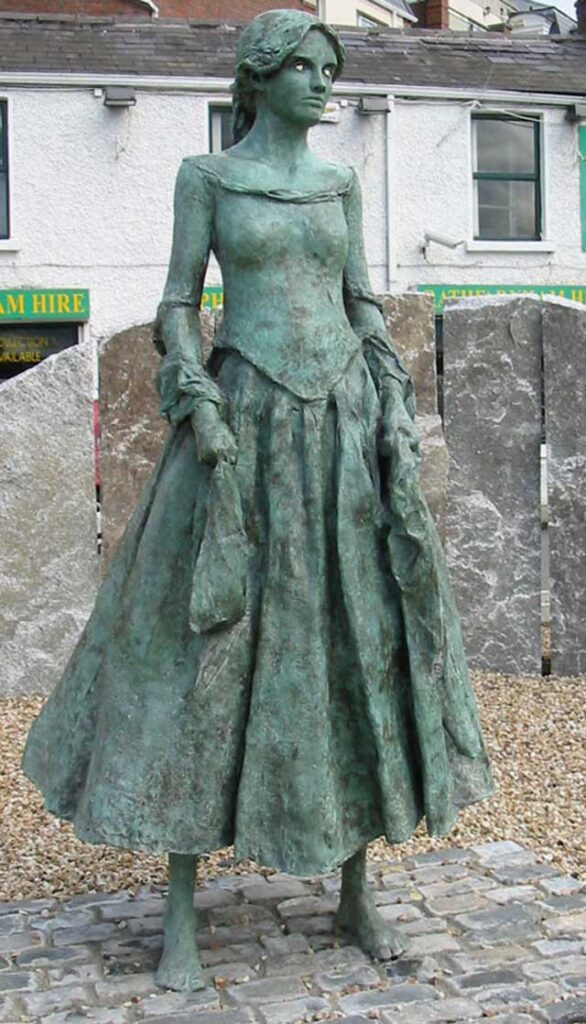
Today, Anne Devlin is remembered as one of Wicklow’s greatest heroines. Her unwavering loyalty, bravery under torture, and refusal to betray her comrades secured her place in Irish history, while memorials in Aughrim and beyond continue to honour her extraordinary legacy.